Antarctica
South Georgia: What Makes This Remote Island Remarkable?
Planning your South Georgia Expedition
Most travellers arrive in South Georgia with a wildlife checklist in mind: king penguins, elephant seals, fur seals, albatrosses. But beyond the iconic species and famous photos, what is it really like to step ashore on an island that feels entirely ruled by nature?
Our expedition specialists share their firsthand experience of the island’s extraordinary wildlife and unforgettable shore landings, revealing why so many travellers consider it the highlight of their Antarctic journey.





Wildlife Highlights of South Georgia
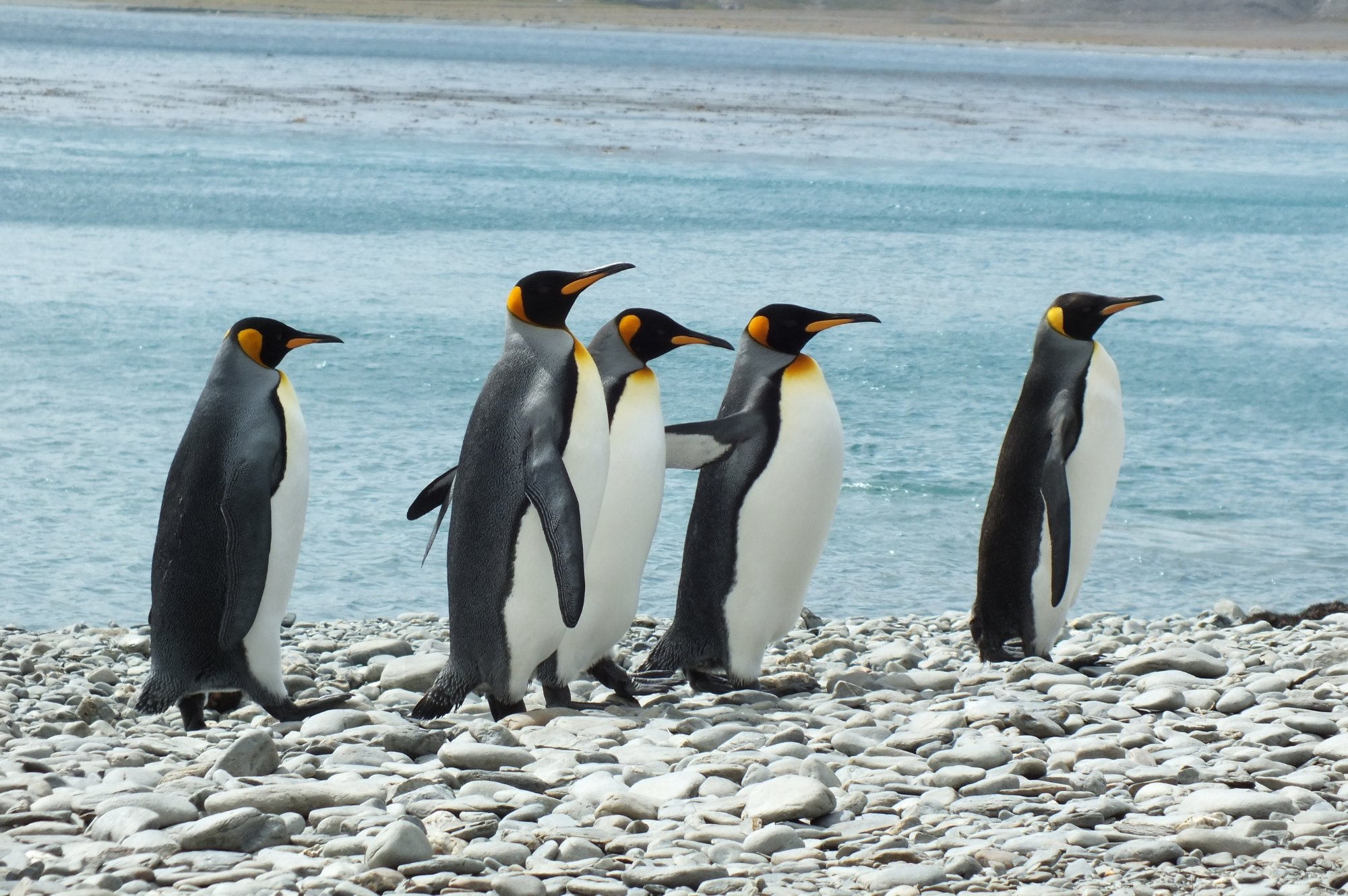
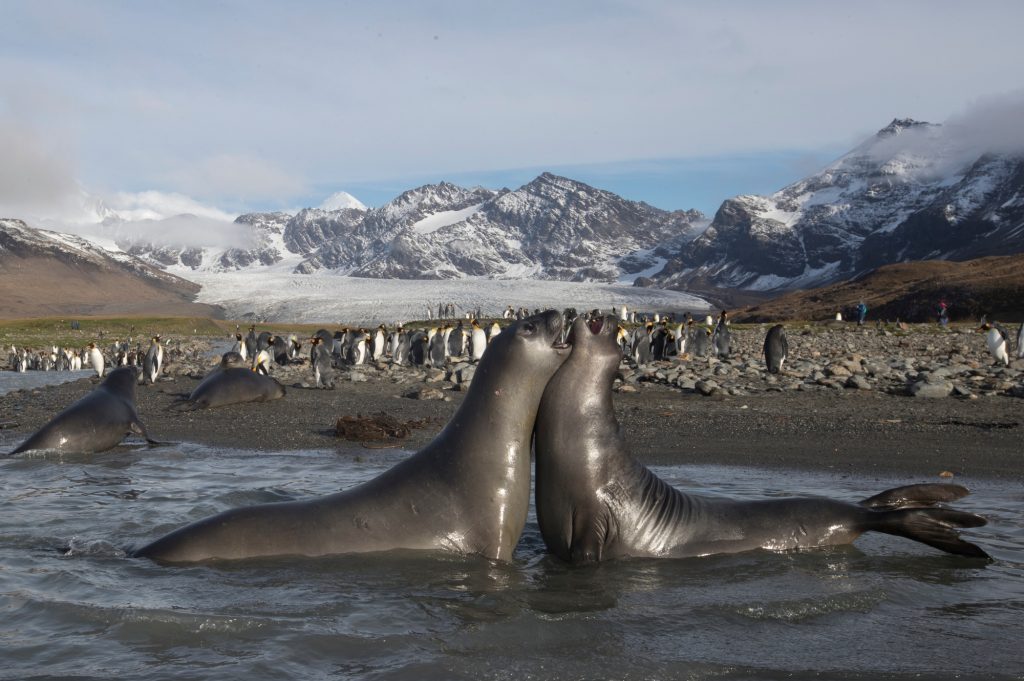
The first thing that strikes most travellers is not the number of animals, but the scale. Vast colonies of king penguins occupy entire beaches and surrounding hillsides, with tens of thousands of birds standing shoulder to shoulder. You can pick up the smell from almost a mile away and as you come closer, you’ll hear the calls of penguins and deep roars of elephant seals.
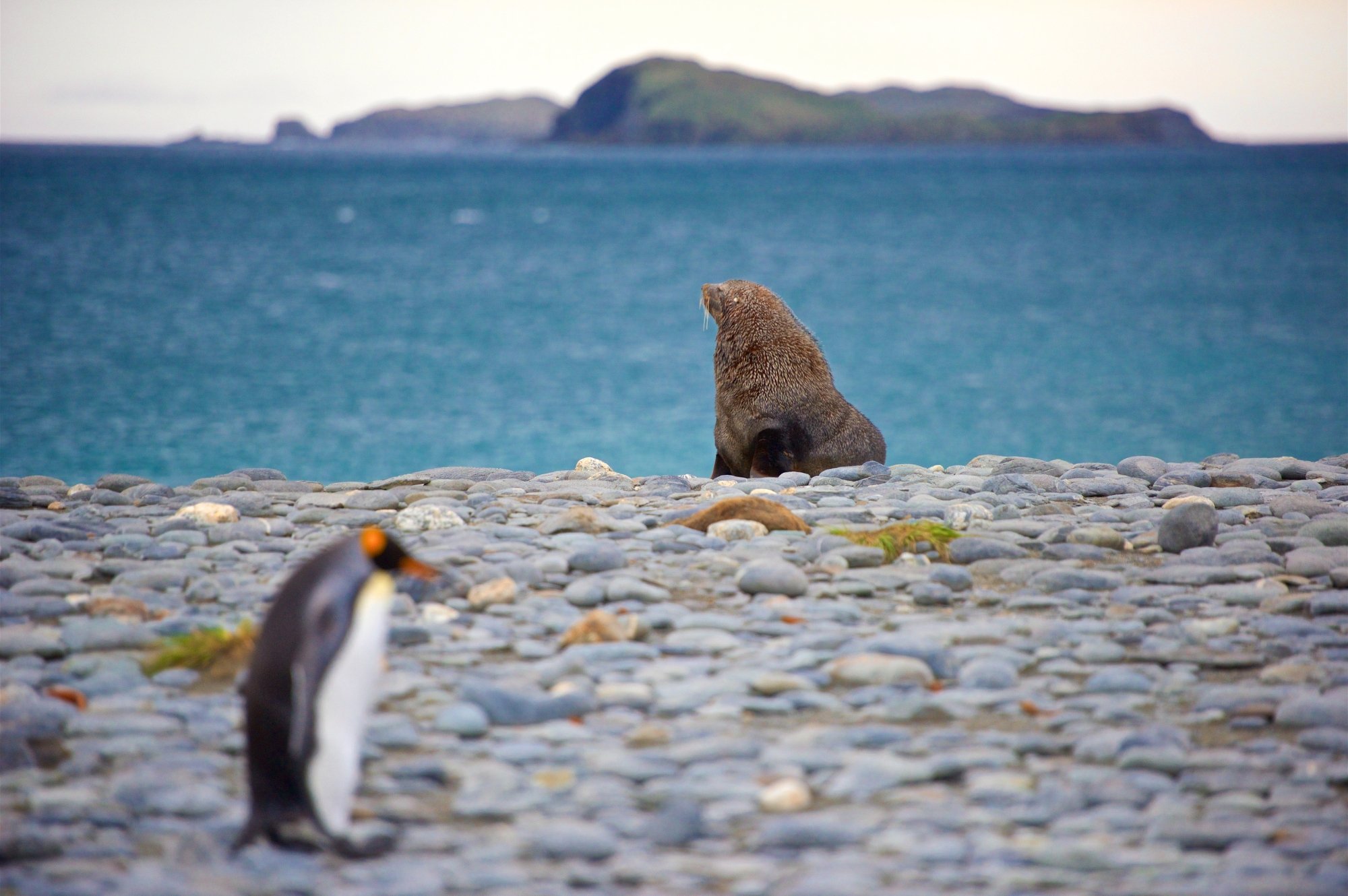
For an expedition leader, the challenge of South Georgia is not spotting wildlife but finding a place to land without disturbing it. Southern elephant seals lounge along the shoreline like oversized boulders, while Antarctic fur seals hide in the tussock grass. During the breeding season, young fur seals transform seemingly empty beaches into obstacle courses of curious, energetic pups.

Most remarkable is how little fear many animals show towards humans. Expedition guidelines require visitors to maintain respectful distances, the wildlife, however, has not signed the same agreement. Curious penguins will often waddle straight up to you, and fur seals can appear seemingly out of nowhere. It is not uncommon to look up from your camera and realise you’ve become surrounded by a small audience of curious wildlife.
Waterproof Expeditions team member Aniek visited South Georgia a few years ago but still remembers like it was yesterday. Aniek: “Almost four years later, I can still close my eyes and be back in South Georgia. The sounds, smells and sights of penguins filling entire valleys created such a powerful impression. I’m not a birder by any means, but I would still recognize the call of a king penguin anywhere.”


Best Time to Visit South Georgia
As with any expedition to the Antarctic region, there is no single “best” time to visit South Georgia. The expedition season runs from late October through March, and every part of the season offers remarkable wildlife encounters and stunning scenery. Rather than asking when to go, it is often better to ask: what kind of South Georgia experience are you looking for?
The island transforms throughout the austral summer. Snow-covered landscapes gradually give way to bustling wildlife colonies. Even travellers visiting the same landing site a few weeks apart can have completely different experiences. If you’re trying to choose between departure dates, don’t overthink it. South Georgia is one of those rare places where there really isn’t a bad time to visit.
Early Season (Late October to November)
For many, early season is when South Georgia is aesthetically at its most beautiful. Fresh snow on the mountains, glaciers looking pristine, and the dramatic contrast between white peaks and black beaches creates spectacular scenery.
Wildlife colonies are just becoming active. Adult king penguins are busy incubating eggs and courting, while big male elephant seals defend their beach as the breeding season reaches its peak. The island often feels quieter and wilder, with fewer fur seals and more freedom to explore landing sites.
Highlights: dramatic snowy landscapes, breeding elephant seals, courtship displays and excellent photography conditions.


Mid-Season (December to January)
This is when South Georgia truly comes alive. Wildlife activity is at a height and many colonies are at their busiest. Beaches, hillsides and tussock-covered valleys are buzzing as penguins, seals and seabirds go about the business of raising the next generation.
King penguin colonies are particularly impressive during this period, with fluffy brown chicks standing among thousands of adults. Antarctic fur seals become increasingly abundant, and several species of albatross are actively raising their chicks. Most of the big beach masters will have left, but you’ll find younger elephant seals testing their skills.
Glaciers start melting, creating rivers and streams with penguins dotted along the sides. This glacier meltwater turns the water into a surreal bright turquoise colour in some places, a striking contrast to the snow-capped peaks and black beaches.
Highlights: peak wildlife activity, huge king penguin colonies, penguin chicks, active seabird colonies and glacial rivers.
Late Season (February to March)
By late summer, many of South Georgia’s young animals are becoming more independent. King penguin chicks are larger and almost done fledging, while elephant seal pups can often be seen testing their confidence along the shoreline.
Sales & Reservations team member Anu visited South Georgia towards the end of the season: “By March, fur seals were everywhere. They were incredibly curious and occasionally a little cheeky, often approaching us to see what we were up to. It felt like stepping into Jurassic Park, surrounded by wildlife in every direction. One of my favourite things was spotting the occasional white fur seal among hundreds of its brown brothers and sisters.”
Another highlight of late season is the photographic opportunity. As the sun sits lower in the sky for longer periods, it creates softer and warmer light than during the height of summer. The island’s vegetation is also at its greenest, adding a different dimension to the landscape.
Highlights: large penguin chicks, playful seal pups, lush green tussock grass and a different perspective on the island’s wildlife cycle.


Most Memorable Shore Landings
One of the things that makes South Georgia so special is that no two landings feel the same. One morning, you might step onto a black sandy beach crowded with elephant seals. A few hours later, you could find yourself hiking through a green valley, following a glacial stream towards a penguin colony. The next day, the focus may shift entirely from wildlife to history as you wander through Grytviken, the island’s former whaling station and final resting place of Sir Ernest Shackleton.
Some of the most memorable moments are not the famous highlights, but the unexpected details. Like watching a young elephant seal investigate the poles set out by the expedition team, spotting an all white fur seal pup among thousands of brown ones or simply watching the animals interact.
And sometimes, the best excursion begins when a landing is not possible, and you go on a zodiac cruise instead. In fact, many expedition guests end up enjoying the zodiac cruises just as much as the shore landings in South Georgia. From a zodiac, you can move quietly into small coves and beneath towering cliffs that are inaccessible on foot. A great opportunity to spot leopard seals and albatros nesting high up on the cliffs. It also gives you a wonderful perspective of the sheer size of south Georgia, with waterfalls tumbling directly into the ocean and glaciers descending down from the mountains.


South Georgia is often the highlight of an Antarctic Expedition
Most travellers visit South Georgia as part of a longer expedition that also includes Antarctica and the Falkland Islands. This complete voyage, which takes around 20 days on average, showcases three very different destinations:
- The Falklands Islands for their rich birdlife and island culture.
- Antarctica for its ice-covered wilderness and spectacular polar landscapes.
- South Georgia for its extraordinary concentration of wildlife and history.
One thing many visitors don’t expect is that South Georgia often feels more alive than Antarctica itself. Antarctica impresses with its ice, vast landscapes and sense of wilderness. South Georgia overwhelms the senses. It is louder, busier, smellier and far more densely populated by wildlife. For many expedition travellers, the island becomes the unexpected highlight of a voyage that was originally planned around Antarctica.
Elizabeth from Waterproof Expeditions: “There are many impressive places in the Southern Ocean, but South Georgia has a magic that is unique. From the early morning sunrises, to the mid-day cacophony of king penguins, ending with the evening sun glare shimmering off the pinnacle icebergs, South Georgia offers an experience unmatched anywhere else.”
Tip! There are also a handful of dedicated South Georgia voyages each season, designed specifically for travellers who want to spend more time exploring the islands in greater depth.

Diving & Snorkeling in South Georgia
While everyone photographs South Georgia from the shore, very few people can say they’ve explored the world beneath the surface. Yet the underwater world is just as fascinating as what happens on land. South Georgia sits in the cold, nutrient-rich Southern Ocean. Beneath the waves you’ll find a thriving marine ecosystem and dramatic underwater landscapes.
One of the highlights is the chance to encounter wildlife in its natural element. Young fur seals are very curious and playful underwater, sometimes even approaching divers. Penguins can be even more impressive. While they may seem slightly awkward on land, underwater they are like streamlined torpedoes, shooting past at high speed. Macro photographers will be fascinated by South Georgia’s rich benthic life with sea stars, delicate invertebrates and an abundance of small critters covering the seafloor.
Unlike tropical diving destinations, South Georgia is not about colourful coral reefs or crystal-clear water. Visibility can vary significantly depending on weather and local conditions like glacier run-off. Instead, it’s about experiencing one of the planet’s most untouched marine ecosystems and the feeling of exploring a place few people ever get to see.
Good to know: Snorkeling is generally accessible to anyone who is comfortable in the water and has some prior snorkeling experience. If you’re looking into diving in South Georgia, you must be drysuit certified and have substantial drysuit experience in cold water.


South Georgia Expeditions
Falklands, South Georgia & Antarctica Expedition Cruise
The Most Epic Wildlife Expedition| Travel duration: | 22 days |
|---|---|
| Date: | 13 Oct - 03 Nov 2026 |
| Ship: | Ushuaia |
| Passengers: | 88 passengers |
Prices
All prices are per person and depending on availability. Please contact us for more details.
• Voyage aboard the USHUAIA as indicated in the itinerary.
• All meals throughout the voyage aboard the USHUAIA.
• All shore excursions and activities throughout the voyage by zodiac.
• Program of lectures by noted naturalists and leadership by experienced expedition staff.
• All miscellaneous service taxes and port charges throughout the program.
• Comprehensive pre-departure material.
• Detailed post-expedition log.
- Any airfare, whether on scheduled or charter flights, baggage
- Pre- and post-land arrangements
- Transfers to / from the vessel
- Passport and visa expenses
- Government arrival and departure taxes
- South Georgia and South Sandwich authority issued electronic visa, which is approximately £200 per person. To be completed no more than 30 days before arrival.
- Meals ashore;
- Cancellation and personal insurance (strongly
recommended) - Excess baggage charges and all items of a personal nature such as bar and beverage charges and telecommunication
charges - The customary gratuity at the end of the voyages (guidelines will be provided).
Would you like some more information?
Contact us!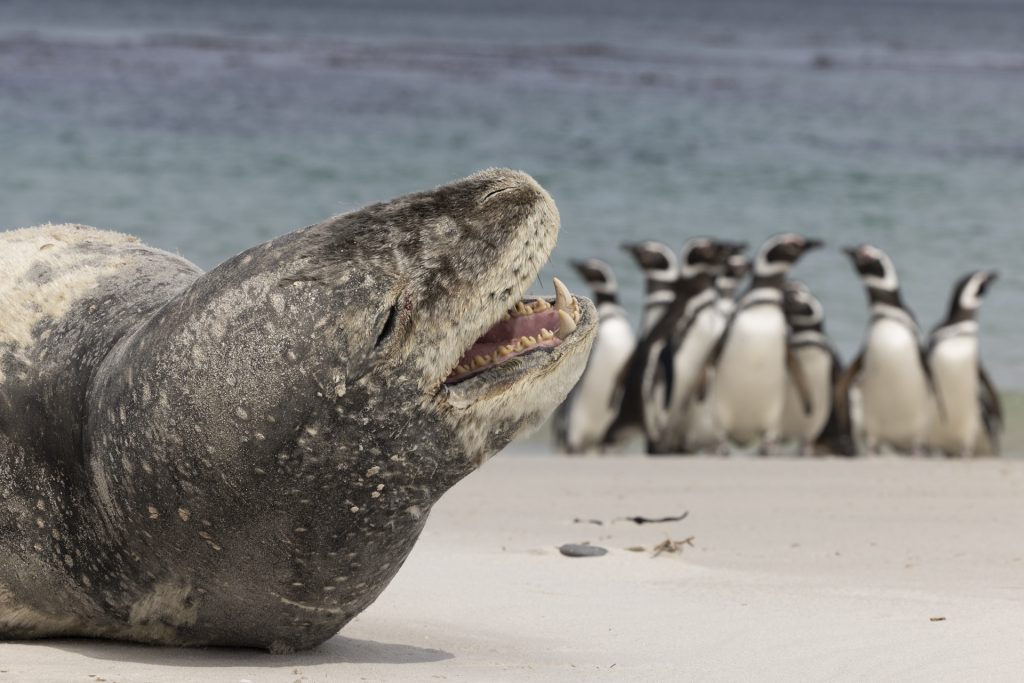
Special offer: Up to 25% off!
Falklands & South Georgia Special
In-depth Exploration


| Travel duration: | 19 days |
|---|---|
| Date: | 23 Oct - 10 Nov 2026 |
| Ship: | Sea Spirit |
| Passengers: | 114 passengers |
Prices
All prices are per person and depending on availability. Please contact us for more details.
- Welcome to Ushuaia! We’ll meet you at the airport and provide a group transfer to the hotel on the day before embarkation.
- 1 pre-voyage night at the Arakur Ushuaia Resort & Spa Hotel, where you can relax in a warm jacuzzi with stunning views.
- All-inclusive beverage package that includes soft drinks, house wine and beer, and house spirits.
- Seamless group transfer to the ship for embarkation on Day 2.
- Cozy accommodation aboard the elegant Sea Spirit, your home away from home.
- Delicious gourmet meals crafted by our chef throughout your voyage.
- All IAATO fees, governmental taxes, and port fees are included for a worry-free experience.
- 24-hour tea and coffee station, complete with cookies for a quick energy boost.
- Scheduled landings and excursions (weather permitting) to explore breathtaking landscapes.
- Expert leadership from our experienced Expedition Leader and top-notch Expedition Team.
- A stylish branded Poseidon Expeditions parka to take home as a cherished memento.
- Comfortable rubber boots for shore landings during your cruise.
- Group transfer to the airport or central location right after disembarkation.
- Comprehensive pre-departure materials to prepare you for your adventure.
- A Digital Voyage Log with photos and a memorable video from our expedition photographer.
- Wi-Fi on board to stay connected during your journey.
- Visa fees (if applicable)
- Airfare to the port of embarkation.
- Personal expenses, such as laundry services and telephone calls.
- Mandatory Emergency Evacuation Insurance with a minimum coverage of US$ 200,000 per person.
- Gratuities for staff.
- Kayaking.
Would you like some more information?
Contact us!
Up to 6250€ Off!
Falklands, South Georgia & Antarctica Expedition Cruise
Extra long voyage departing from Puerto Madryn| Travel duration: | 21 days |
|---|---|
| Date: | 03 Nov - 23 Nov 2026 |
| Ship: | Hondius |
| Passengers: | 170 passengers |
Prices
All prices are per person and depending on availability. Please contact us for more details.
- Voyage aboard the indicated vessel as indicated in the itinerary
- All meals throughout the voyage aboard the ship including snacks, coffee and tea.
- All shore excursions and activities throughout the voyage by Zodiac.
- Program of lectures by noted naturalists and leadership by experienced expedition staff.
- Free use of rubber boots and snowshoes.
- Luggage transfer from pick-up point to the vessel on the day of embarkation, in Ushuaia.
- Pre-scheduled group transfer from the vessel to the airport in Ushuaia (directly after disembarkation).
- All miscellaneous service taxes and port charges throughout the programme.
- Comprehensive pre-departure material.
- Any airfare, whether on scheduled or charter flights
- Pre- and post- land arrangements.
- Passport and visa expenses.
- Government arrival and departure taxes.
- Meals ashore.
- Baggage, cancellation and personal insurance (which is strongly recommended).
- Excess baggage charges and all items of a personal nature such as laundry, bar, beverage charges and telecommunication charges.
- The customary gratuity at the end of the voyages for stewards and other service personnel aboard (guidelines will be provided).
Would you like some more information?
Contact us!
Up to 5250€ off!
Falklands, South Georgia & Antarctica Expedition Cruise
The Most Epic Wildlife Expedition | Travel duration: | 19 days |
|---|---|
| Date: | 23 Nov - 11 Dec 2026 |
| Ship: | Plancius |
| Passengers: | 108 passengers |
Prices
All prices are per person and depending on availability. Please contact us for more details.
- Voyage aboard the indicated vessel as indicated in the itinerary
- All meals throughout the voyage aboard the ship including snacks, coffee and tea.
- All shore excursions and activities throughout the voyage by Zodiac.
- Program of lectures by noted naturalists and leadership by experienced expedition staff.
- Free use of rubber boots and snowshoes.
- Luggage transfer from pick-up point to the vessel on the day of embarkation, in Ushuaia.
- Pre-scheduled group transfer from the vessel to the airport in Ushuaia (directly after disembarkation).
- All miscellaneous service taxes and port charges throughout the programme.
- Comprehensive pre-departure material.
- Any airfare, whether on scheduled or charter flights.
- Pre- and post- land arrangements.
- Passport and visa expenses.
- Government arrival and departure taxes.
- Meals ashore.
- Baggage, cancellation and personal insurance (which is strongly recommended).
- Excess baggage charges and all items of a personal nature such as laundry, bar, beverage charges and telecommunication charges.
- The customary gratuity at the end of the voyages for stewards and other service personnel aboard (guidelines will be provided).
Would you like some more information?
Contact us!
Up to 5250€ off!
Falklands, South Georgia & Antarctica Expedition Cruise
The Most Epic Wildlife Expedition | Travel duration: | 19 days |
|---|---|
| Date: | 11 Dec - 29 Dec 2026 |
| Ship: | Plancius |
| Passengers: | 108 passengers |
Prices
All prices are per person and depending on availability. Please contact us for more details.
- At least one dedicated birding expedition guide in our team available to help you identify, photograph and learn more about the birds species.
- Voyage aboard the indicated vessel as indicated in the itinerary
- All meals throughout the voyage aboard the ship including snacks, coffee and tea.
- All shore excursions and activities throughout the voyage by Zodiac.
- Program of lectures by noted naturalists and leadership by experienced expedition staff.
- Free use of rubber boots and snowshoes.
- Luggage transfer from pick-up point to the vessel on the day of embarkation, in Ushuaia.
- Pre-scheduled group transfer from the vessel to the airport in Ushuaia (directly after disembarkation).
- All miscellaneous service taxes and port charges throughout the programme.
- Comprehensive pre-departure material.
- Any airfare, whether on scheduled or charter flights.
- Pre- and post- land arrangements.
- Passport and visa expenses.
- Government arrival and departure taxes.
- Meals ashore.
- Baggage, cancellation and personal insurance (which is strongly recommended).
- Excess baggage charges and all items of a personal nature such as laundry, bar, beverage charges and telecommunication charges.
- The customary gratuity at the end of the voyages for stewards and other service personnel aboard (guidelines will be provided).
Would you like some more information?
Contact us!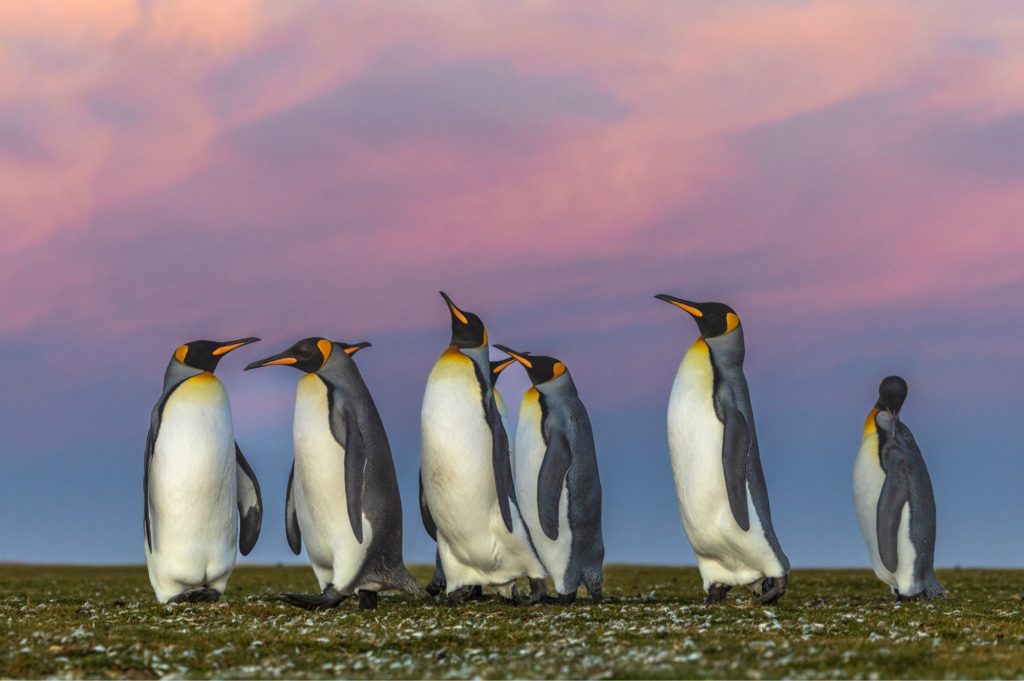
Special offer: Up to 30% off!
Falklands, South Georgia & Antarctica Expedition Cruise
The Most Epic Wildlife Expedition
| Travel duration: | 23 days |
|---|---|
| Date: | 22 Dec - 13 Jan 2027 |
| Ship: | Ocean Albatros |
| Passengers: | 169 passengers |
Prices
All prices are per person and depending on availability. Please contact us for more details.
Prior to Embarkation
- One pre-voyage hotel night with breakfast in Ushuaia
- Transfer from airport in Ushuaia (USH) to group hotel (providing you arrive on Day 1 of the itinerary, and we have your confirmed air itinerary at least 15 days prior to departure)
- Transfer from group hotel to ship for embarkation
On Board
- Shipboard accommodations and meals
- “Welcome” and “Farewell” receptions with sparkling wine and soft drinks
- Beer/wine/soft drinks at lunch and dinner (wine not included at lunch on landing days)
- Coffee/Tea/Cocoa 24 hours a day
- 500MB WiFi card for use on your personal devices
- Expedition jacket for use during the voyage
- Fleece-lined down jacket (yours to keep)
- A pair of loaner boots for use during the voyage
- All scheduled landings and excursions
- Snowshoes for use during landings (subject to availability)
- Our Citizen Science program: participation in a variety of scientific activities that support important research projects
- Photography Coach available throughout the voyage
- Participation in the Polar Plunge
- Access to our onboard medical clinics
- Access to our onboard fitness centers
- All port and landing fees
- Digital Voyage Log
Post Disembarkation
- Group transfer from ship to airport, hotel in Ushuaia, or central location (please note we cannot drop at Airbnbs or private homes, which are often inaccessible for our transfer vehicles)
Included with Ocean Albatros Suites
- Wine and fruit on arrival
- Restocked mini bar (non-alcoholic)
- Complimentary laundry service
- In-room espresso machine
- Any airfare or travel expenses associated with arrival or departure other than those specified above
- Pre- or post-voyage expenses in Ushuaia other than those specified above
- Travel insurance; medical insurance; evacuation coverage
- Laundry and personal expenses incurred on board, except as listed in inclusions
- Any other alcohol and soft drinks, except as listed in inclusions
- Onboard communication charges such as outgoing phone calls or WiFi, except as listed in inclusions
- Staff/crew gratuities
Would you like some more information?
Contact us!
Falklands, South Georgia & Antarctic Polar Circle Expedition Cruise
Cross the Antarctic Polar Circle
| Travel duration: | 23 days |
|---|---|
| Date: | 13 Feb - 07 Mar 2027 |
| Ship: | Hondius |
| Passengers: | 170 passengers |
Prices
All prices are per person and depending on availability. Please contact us for more details.
- Voyage aboard the indicated vessel as indicated in the itinerary
- All meals throughout the voyage aboard the ship including snacks, coffee and tea.
- All shore excursions and activities throughout the voyage by Zodiac.
- Program of lectures by noted naturalists and leadership by experienced expedition staff.
- Free use of rubber boots and snowshoes.
- Luggage transfer from pick-up point to the vessel on the day of embarkation, in Ushuaia.
- Pre-scheduled group transfer from the vessel to the airport in Ushuaia (directly after disembarkation).
- All miscellaneous service taxes and port charges throughout the programme.
- Comprehensive pre-departure material.
- Any airfare, whether on scheduled or charter flights
- Pre- and post- land arrangements.
- Passport and visa expenses.
- Government arrival and departure taxes.
- Meals ashore.
- Baggage, cancellation and personal insurance (which is strongly recommended).
- Excess baggage charges and all items of a personal nature such as laundry, bar, beverage charges and telecommunication charges.
- The customary gratuity at the end of the voyages for stewards and other service personnel aboard (guidelines will be provided).
Would you like some more information?
Contact us!
Special offer: Up to 25% off!
Falklands, South Georgia & Antarctica Expedition Cruise
The most epic wildlife expedition | Travel duration: | 23 days |
|---|---|
| Date: | 10 Mar - 01 Apr 2027 |
| Ship: | Sea Spirit |
| Passengers: | 114 passengers |
Prices
All prices are per person and depending on availability. Please contact us for more details.
- 1 pre-voyage night at the Arakur Ushuaia Resort & Spa Hotel, where you can relax in a warm jacuzzi with stunning views.
- Welcome to Ushuaia! We’ll meet you at the airport and provide a group transfer to the hotel on the day before embarkation
- Seamless group transfer to the ship for embarkation on Day 2.
- All-inclusive beverage package that includes soft drinks, house wine and beer, and house spirits.
- Cozy accommodation aboard the elegant Sea Spirit, your home away from home.
- All IAATO fees, governmental taxes, and port fees are included for a worry-free experience.
- Delicious gourmet meals crafted by our chef throughout your voyage.
- 24-hour tea and coffee station, complete with cookies for a quick energy boost.
- Scheduled landings and excursions (weather permitting) to explore breathtaking landscapes.
- Expert leadership from our experienced Expedition Leader and top-notch Expedition Team.
- A stylish branded Poseidon Expeditions parka to take home as a cherished memento.
- Comfortable rubber boots for shore landings during your cruise.
- Group transfer to the airport or central location right after disembarkation
- Comprehensive pre-departure materials to prepare you for your adventure.
- A Digital Voyage Log with photos and a memorable video from our expedition photographer.
- Wi-Fi on board to stay connected during your journey.
- Visa fees (if applicable)
- Airfare to the port of embarkation.
- Personal expenses, such as laundry services and telephone calls.
- Mandatory Emergency Evacuation Insurance with a minimum coverage of US$ 200,000 per person.
- Gratuities for staff.
- Optional activities such as kayaking and camping, which have limited availability and must be booked separately for an additional charge.
Would you like some more information?
Contact us!Still looking for your dream expedition?
Subscribe to our newsletter and be the first to see inspiring content, new expeditions and special offers. As a welcome gift, you will receive a € 250 discount voucher.
"*" indicates required fields